
Guides
Twenty guides to specifying Moroccan craft – written for designers, architects and FF&E buyers, from our own workshops in Fès. What the materials do, where they belong, and what to settle before anything is ordered.
Choosing and using
zellige and bejmat
The decisions made between concept and tender – which tile goes where, how it behaves underfoot and in water, and what the layout and the joint do to a room.
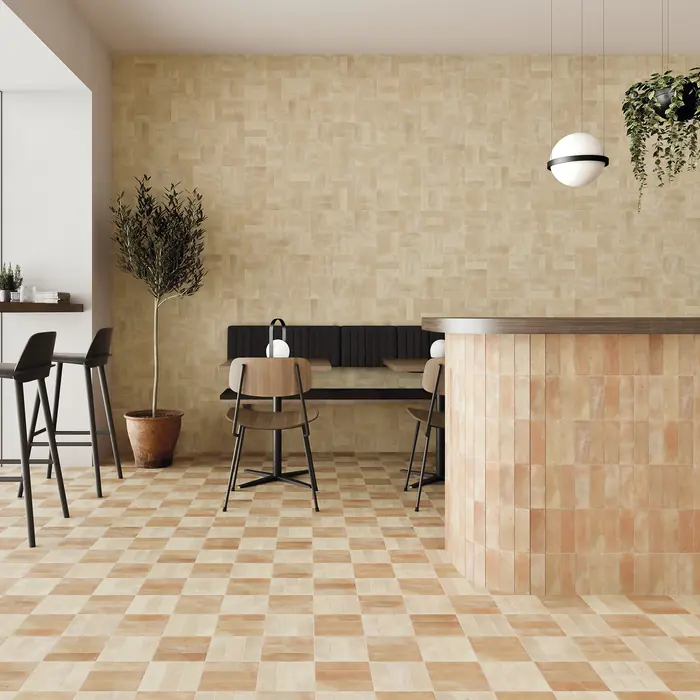
Zellige or bejmat – which to use where
Two tiles from the same tradition, developed for opposite jobs. A plane-by-plane comparison with a table you can work from.
Read the guide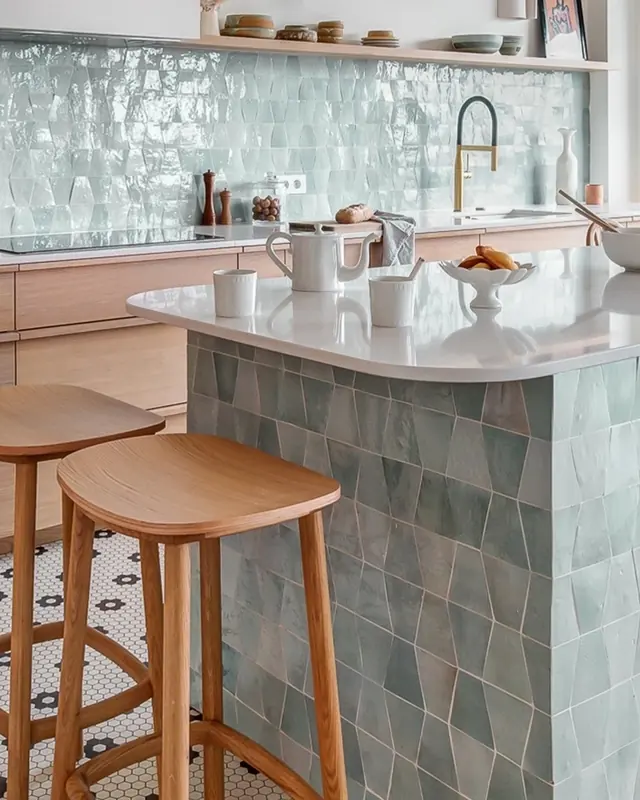
Zellige vs ceramic and subway tile
What you actually trade between handmade and machine-made – and where the machine tile is the right answer.
Read the guide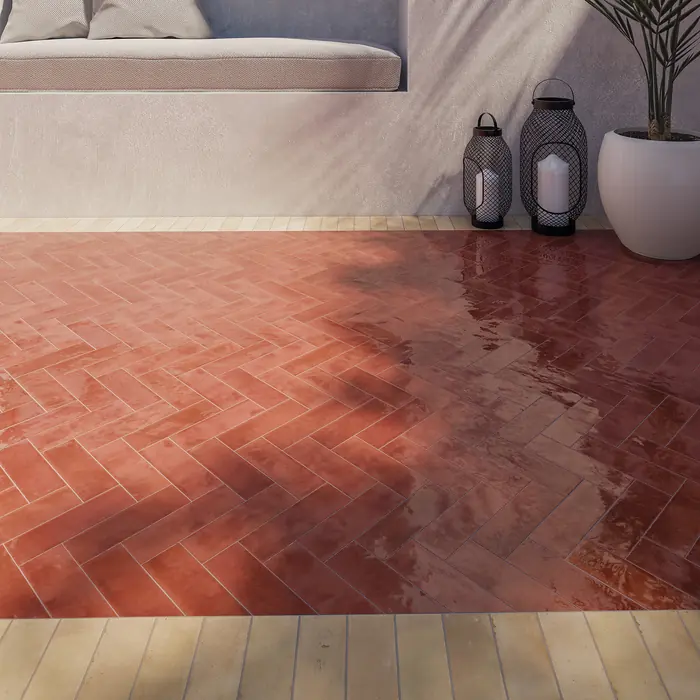
Can zellige be used on floors?
The narrow set of floors where a wall tile genuinely works, and the ones where it should not be asked to.
Read the guide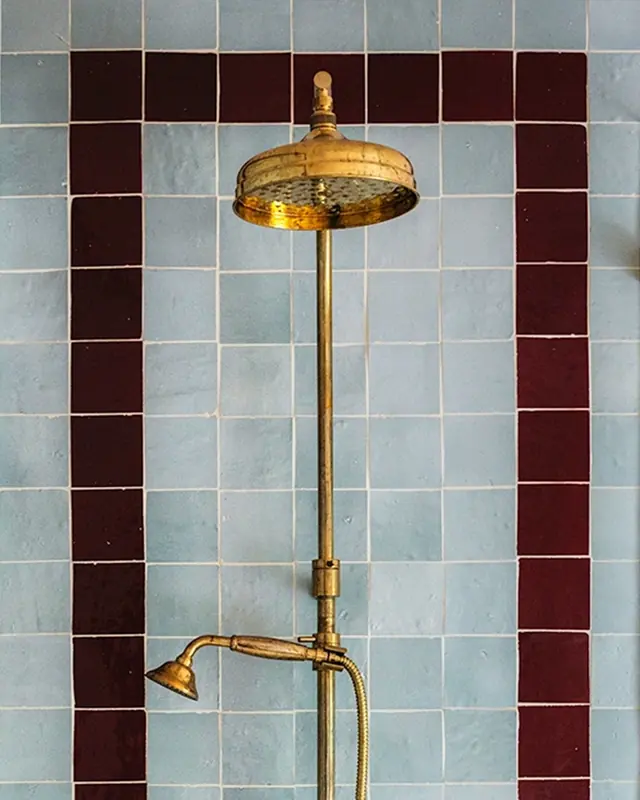
Zellige in showers, wet rooms and hammams
Zone by zone through a wet area, and the six things to agree before the tile is ordered.
Read the guide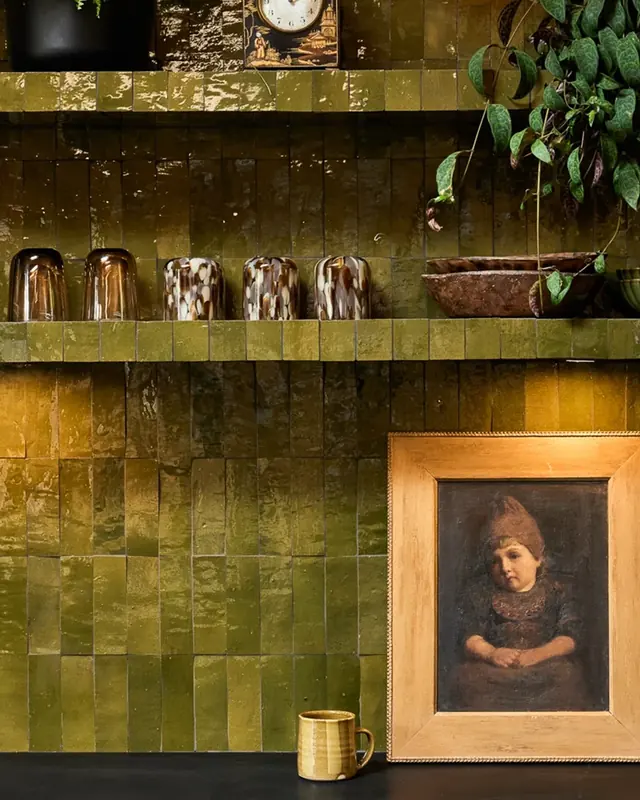
Choosing grout colour for zellige
Three strategies for the joint, and what each does to a wall at three metres and at thirty centimetres.
Read the guide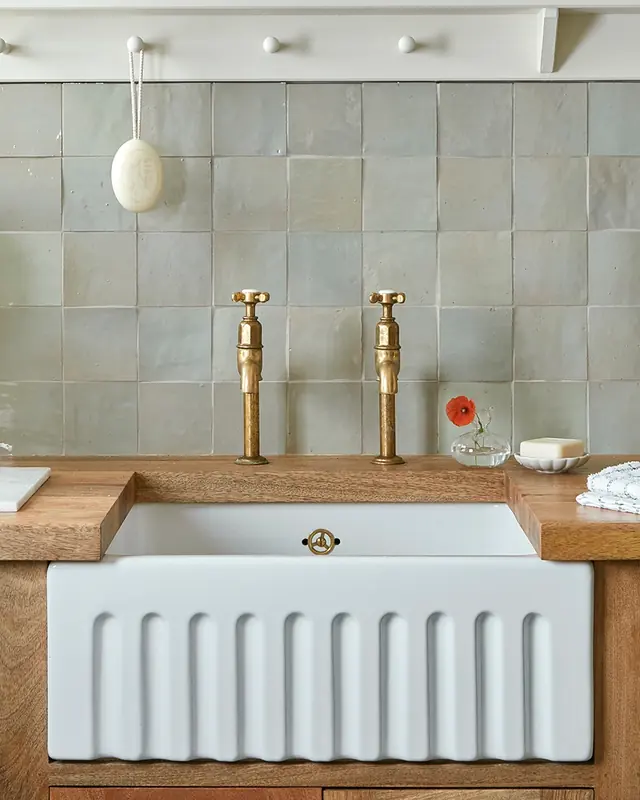
Zellige colour palettes for hospitality
Four palette families that hold up under hotel lighting, with swatches you can enquire on directly.
Read the guide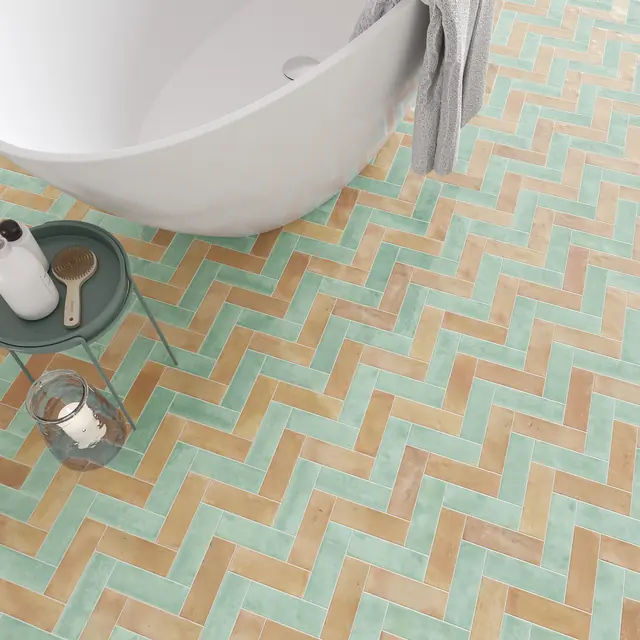
Bejmat layout patterns
Herringbone, chevron, stacked, scatter and borders – what each does to a room, and where the cuts land.
Read the guide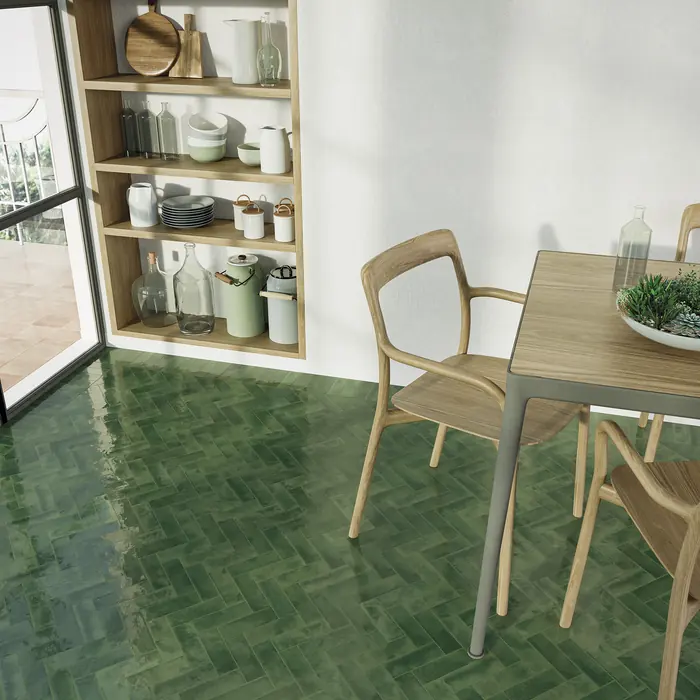
Is bejmat right for restaurant floors?
What a commercial floor demands, how handmade terracotta answers it, and what to settle with the operator.
Read the guide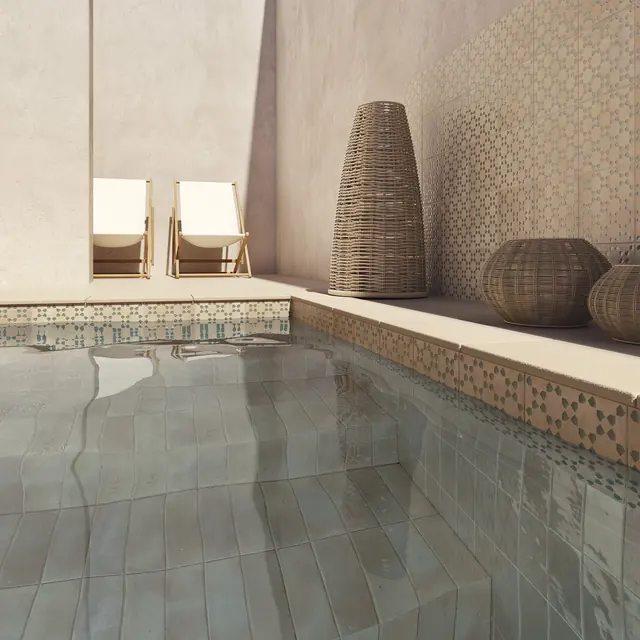
Moroccan tile outdoors in Gulf climates
Terraces, courtyards and pool surrounds – sun, heat underfoot, glare, dust and the detailing that decides whether it lasts.
Read the guideHow it is made,
and how it behaves
Background for the research stage, and for the moment a sample arrives and someone asks why it does not look like the last one.
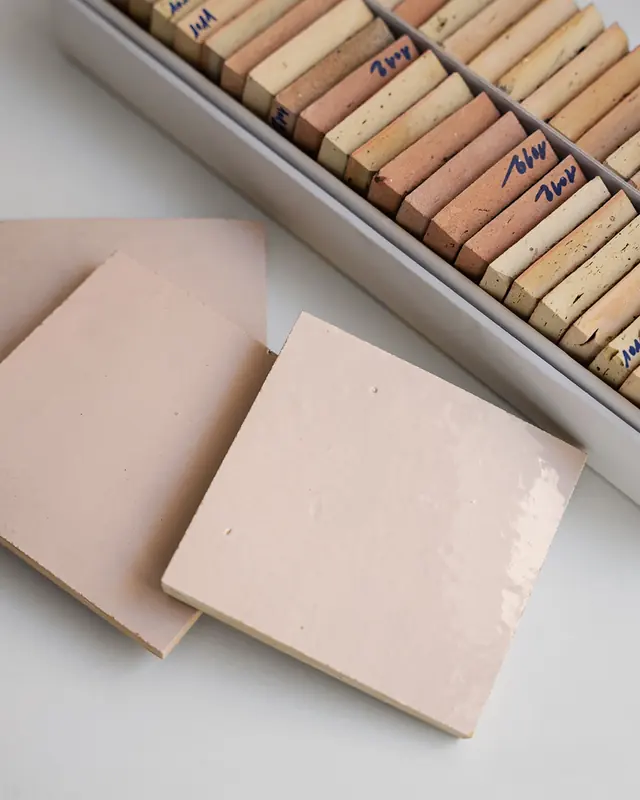
How zellige is made
Six stages from local clay to hand-cut tile, and how each one shows up in the finished wall.
Read the guide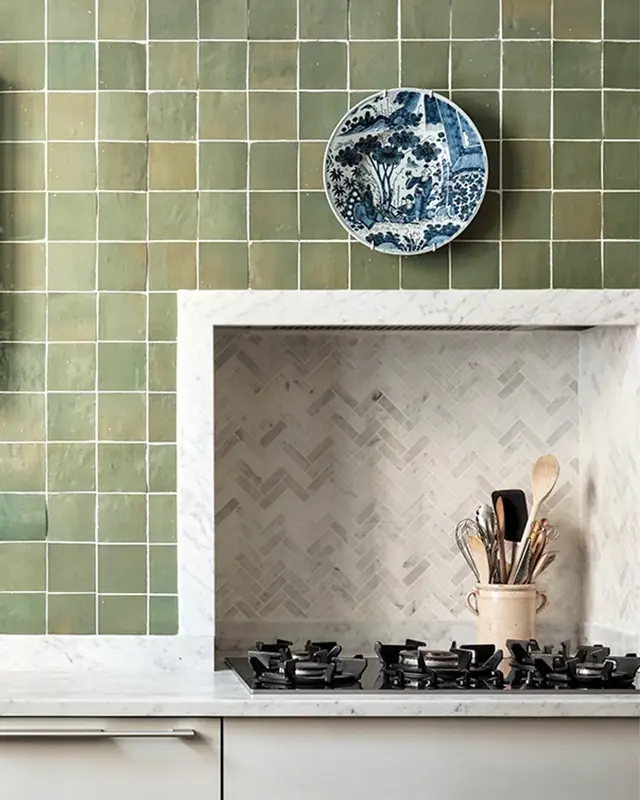
Why zellige colour varies between batches
What a colour reference actually promises, and the five things that control variation on a project.
Read the guide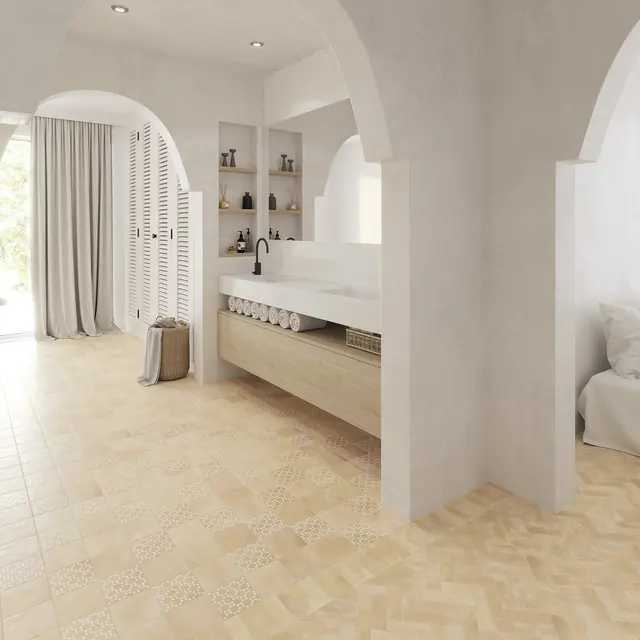
Cleaning and maintaining zellige and bejmat
A handover-ready care guide, written to be lifted into the operations manual.
Read the guideHandwoven wool,
chosen properly
Which weave suits which room, how to tell a genuine piece from a copy, and the sizing decision that undoes more rug packages than any other.
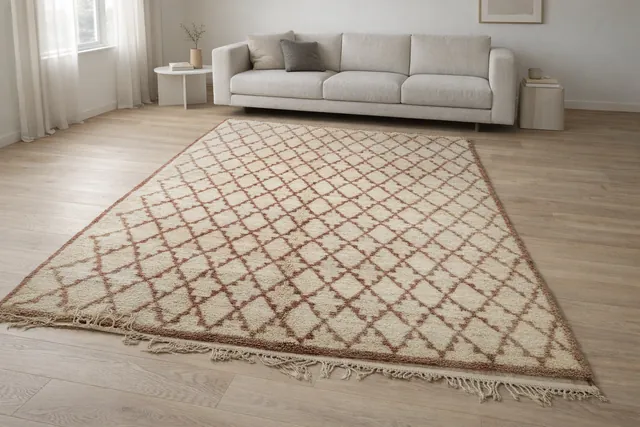
Rug sizing for suites, lobbies and lounges
The furniture relationships that decide the dimension, and when to commission a size rather than choose one.
Read the guide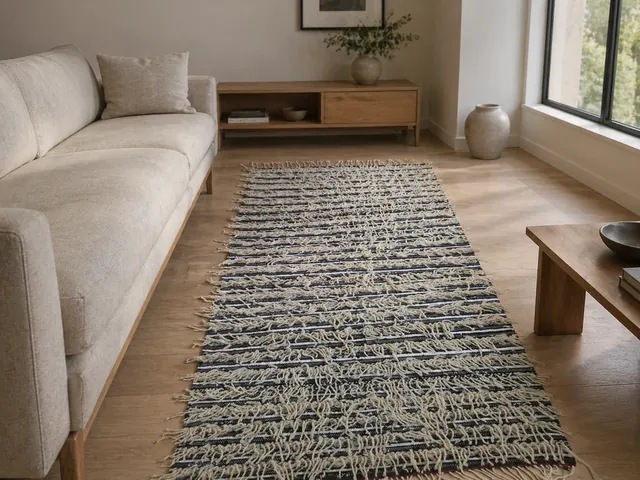
Beni Ourain or kilim
One structural difference, and everything that follows from it – underfoot, acoustically, and room by room.
Read the guide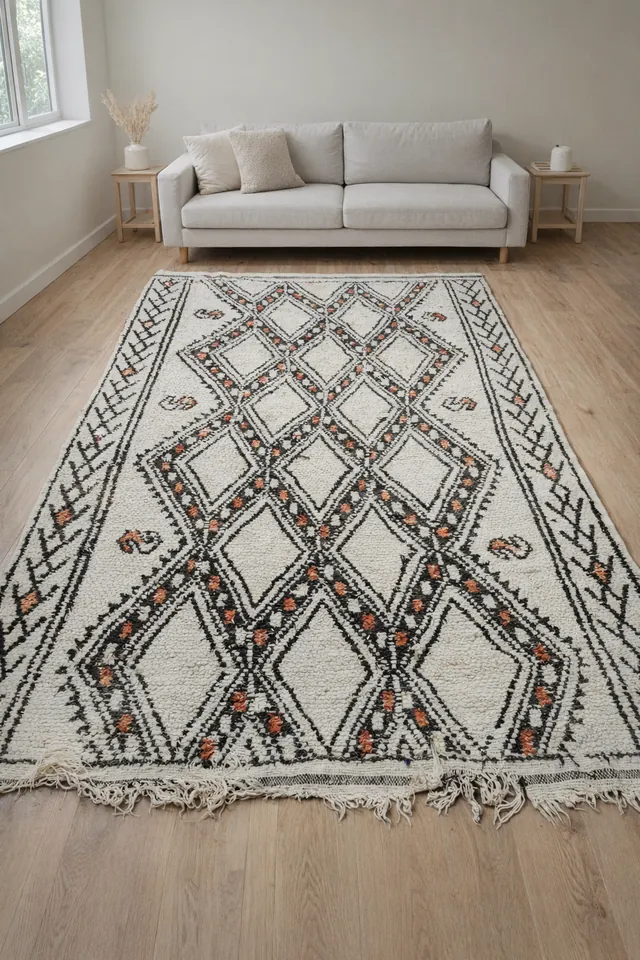
How to identify an authentic Beni Ourain
What to examine, what to ask a supplier, and which popular authenticity tests are folklore.
Read the guidePierced brass,
and what it does to a room
Two guides on specifying hand-worked brass – designing for the shadow it throws, and choosing a finish that will still look right in five years.
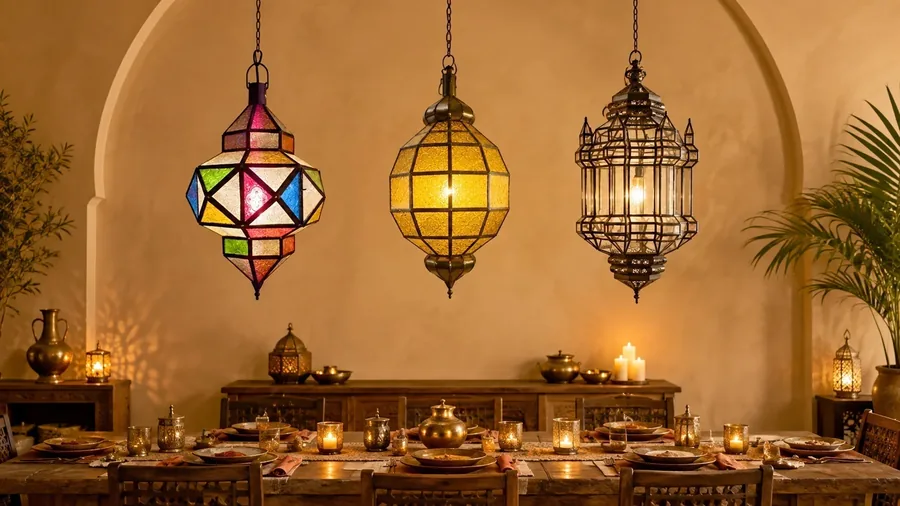
Moroccan lighting in hospitality interiors
Scale, clustering and shadow – treating a fitting as a light source and a pattern generator at once.
Read the guide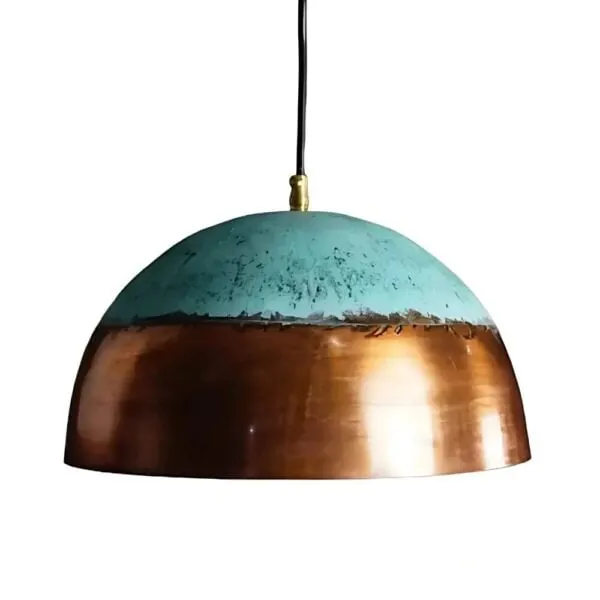
Brass finishes for Moroccan lighting
Polished, hammered, aged, blackened, verdigris – how each reads, how each ages, and what to confirm.
Read the guideGetting it through
a live project
How a direct workshop relationship runs, what the specification document needs to say, and how much craft a restrained scheme should carry.
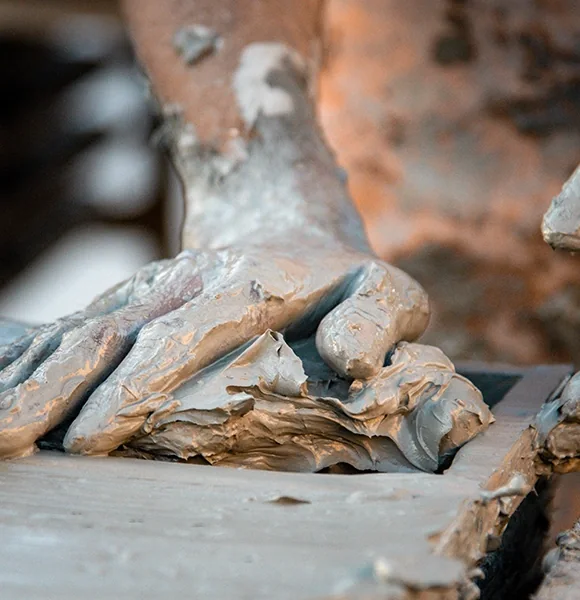
Sourcing Moroccan craft for GCC projects
Brief to handover in six stages, and the questions that separate a workshop relationship from a trading one.
Read the guide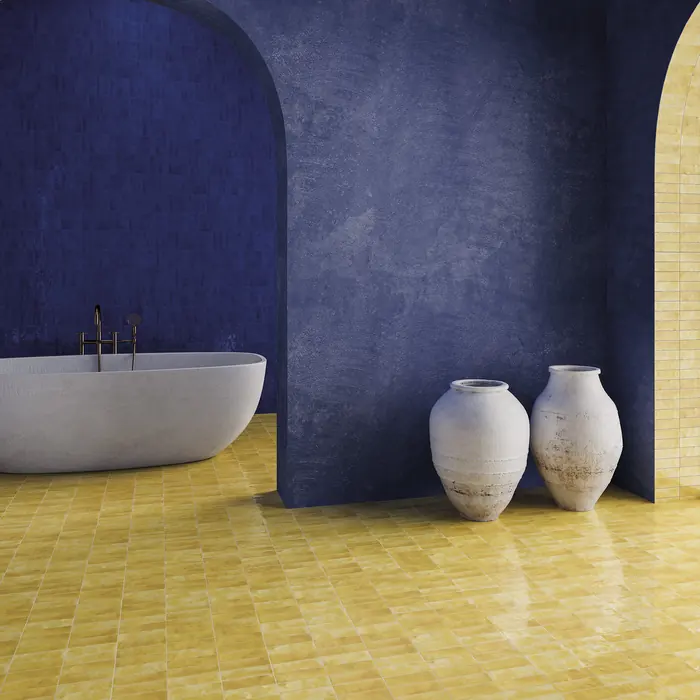
Specifying Moroccan tile for hotel projects
The clauses a handmade tile specification needs, and how they change area by area through a hotel.
Read the guide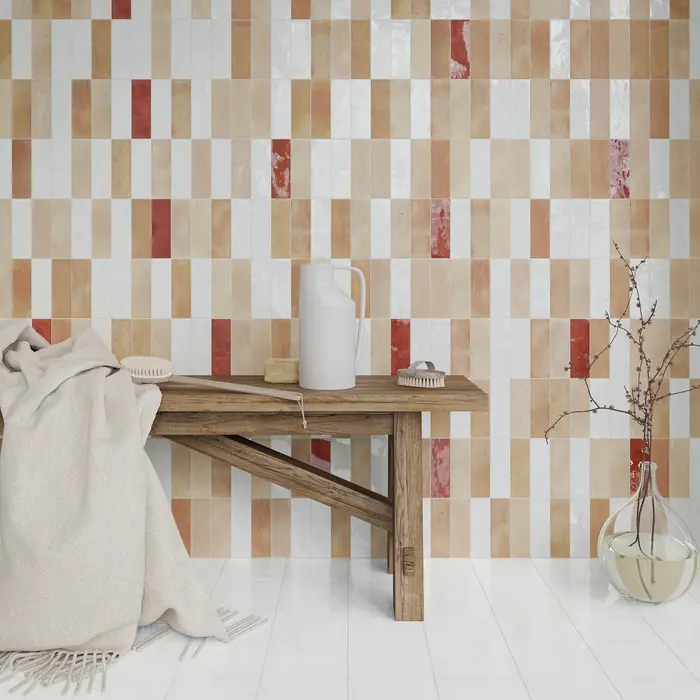
Moroccan craft in modern minimal interiors
How much handmade material a restrained scheme can carry, and how to place it so it reads as architecture.
Read the guideNothing here is a substitute for material in your hands. Every guide ends with the same offer, because it is the one that actually helps: tell us what you are specifying and we will send samples from our own workshops in Fès.
Still deciding?
Ask us directly
Send the project, the spaces and the direction you are working in. We will come back with a considered response – and, where it helps, the material itself.