
There is a pattern to how natural surfaces go wrong in commercial buildings, and it almost never involves the material failing. A hotel opens, housekeeping is handed a floor with no specific instruction, the contract cleaner uses whatever is standard across the estate, and eighteen months later the finish looks tired in a way nobody can quite account for.
So this guide is written to be extracted – the substance of it belongs in the operations and maintenance manual, not only in a designer’s reading list.
Start with what the surface actually is
Zellige and bejmat are not one material with one regime.
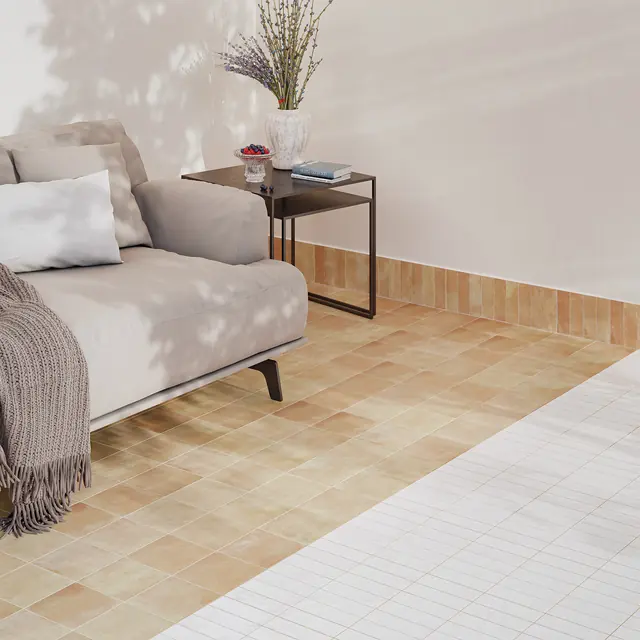
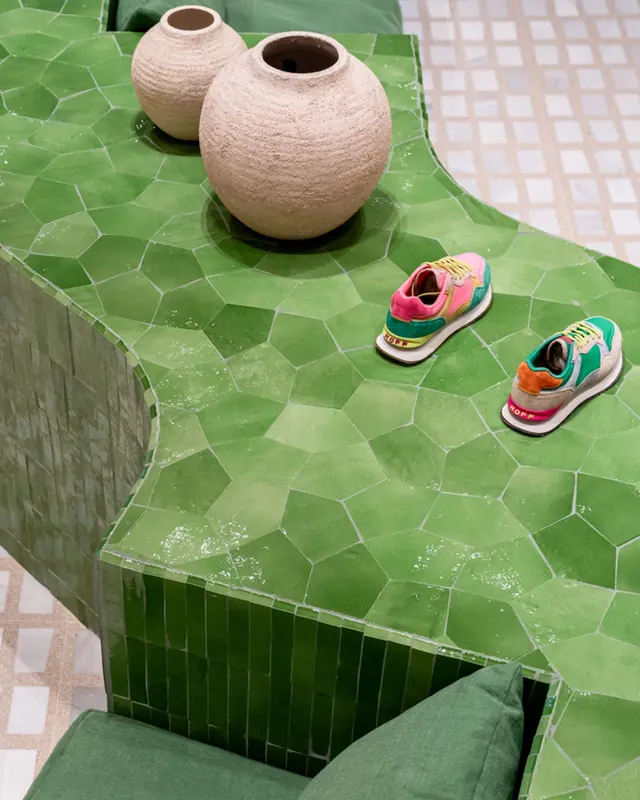
Glazed surfaces – all zellige, and glazed bejmat – present a fired glaze to the world. The glaze is the protective layer and it is generally easy to live with. The vulnerable parts are the joints between tiles and, over a long period, the hand-cut edges.
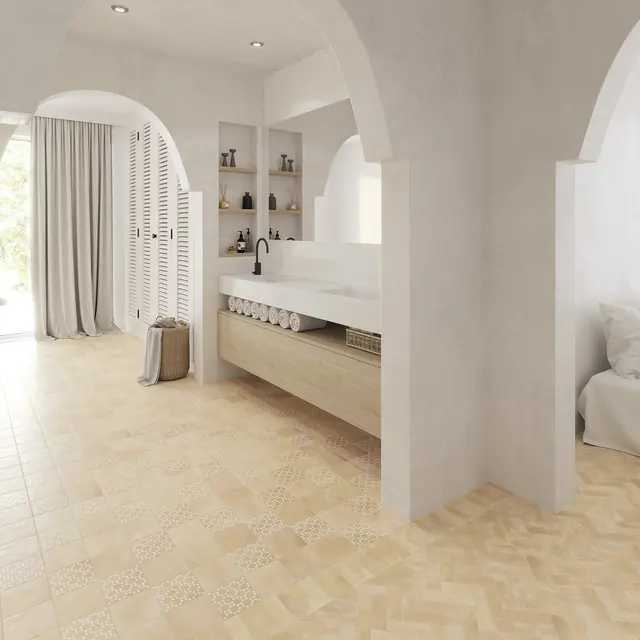
Natural, unglazed terracotta – the natural bejmat finishes – presents the fired clay body itself. It behaves more like a natural stone floor: it takes on the life of the room, develops patina, and is more open to staining early in its life than it is later.
That difference governs almost everything below, so establish which surfaces are which before anything is written down.
Routine care, and what to avoid
Sound routine
- Sweep or dry-mop floors regularly – grit is more abrasive than traffic
- Clean with warm water and a pH-neutral cleaner
- Wipe spills on natural terracotta promptly rather than letting them sit
- Use soft cloths and soft-bristled brushes on walls and joints
- Put barrier matting at external doors so grit stops at the threshold
- Test any new product on a spare tile before it reaches the floor
Worth ruling out
- Acidic descalers and bleach-based products on any of these surfaces
- Abrasive powders, scouring pads and wire wool
- Steam cleaners, unless confirmed for the specific tile
- Strong alkaline degreasers used routinely rather than occasionally
- Wax or polish applied without a plan for removing it later
- Anything at all that has not been tested on a spare tile first
On sealing
This is the question that arrives most often and the one that cannot be answered generically. Whether a tile needs sealing, when, and with what depends on the body, the finish, the grout and the exposure – and it varies between workshops and between glazed and unglazed product. Advice carried across from another supplier’s tile is not advice about yours.
The practical approach: ask your supplier for guidance against the specific tile you are installing, ask the grout manufacturer for theirs, get both in writing, and put them in the O&M manual with the product names. Then make sure whoever maintains the building can actually find them.
The single most useful handover item
A labelled box of spare tiles from the original production run, stored on site. It is the only reliable way to make a future repair invisible – and it is also the test surface for every cleaning product anyone ever proposes. The reasoning is in why zellige colour varies between batches.
How each surface ages
Glazed zellige
The glaze is stable and holds its colour. What changes over years is the edges and the joints – a slight softening, a gradual darkening in the joint line. In a well-used building this reads as age rather than wear, and it is one of the reasons old zellige walls look better than new ones.
Glazed bejmat
Similar, with the difference that it is underfoot. Expect the circulation lanes to develop a subtly different character from the protected areas over time. Consistent cleaning across the whole floor – rather than intensive attention on the traffic routes only – keeps the transition gradual.
Natural bejmat
This is the surface that changes most, and deliberately so. It darkens, it takes on a slight polish where people walk, and it acquires the marks of ordinary use. Explain this to the operator before opening rather than after the first complaint, because the same floor can be described as patinated or as stained depending entirely on what the client was led to expect.
What to hand over
Six items, and the project is covered:
- A surface schedule saying which tile is where, and whether it is glazed or natural.
- Supplier and grout manufacturer care guidance for those specific products, in writing.
- An approved cleaning product list, with the named products the operator is actually going to buy – not a description of a category.
- An explicit exclusion list, because “use a neutral cleaner” is advice and “never use acid or bleach on this floor” is an instruction.
- Attic stock, labelled with reference, colour and the area it belongs to.
- A short note on expected ageing for any natural terracotta, so the first signs of patina are recognised as intended.
Have the conversation early
The best time to discuss maintenance is while the material is still being selected, because it occasionally changes the selection. If an operator’s cleaning contract is fixed across a group and cannot accommodate a natural terracotta, that is worth discovering during design rather than at handover – glazed finishes may simply be the better answer for that building.
None of this is onerous. These surfaces have been maintained in continuous use for centuries with water, a brush and a little attention. The risk in a modern project is not that the material is fragile; it is that nobody told anyone what it was.