The most common fault in an FF&E rug package is not the pattern or the colour. It is a rug an arm’s length too small – and it undoes the room more effectively than almost any other decision.
GuideRugs6 min read
An undersized rug reads as an object dropped into a room. A correctly sized rug disappears as an object and becomes a zone – it holds the furniture together, defines where one part of a space ends and another begins, and makes a large room legible.
The difference is not aesthetic preference. It is a relationship between the rug and the furniture standing on it, and once you know the relationship the dimension follows.
Three principles
Everything else is a variation on these
01
All on, or all off – rarely half
Either every leg of the furniture group sits on the rug, or every leg sits off it with the rug held clear. Front legs on and back legs off works in a domestic living room and looks unresolved in a hotel lounge, where furniture gets moved and never quite returns.
02
The rug should extend beyond the thing it serves
Past the sides and the foot of a bed, so a guest steps onto wool rather than stone. Past the edge of a seating group, so the arrangement sits within the rug rather than on top of it. The margin is what makes it read as deliberate.
03
Leave a clear border of hard floor
A rug should not run to the skirting. A consistent margin of exposed floor around the edge is what distinguishes a rug from a badly fitted carpet, and it is where the floor finish earns its place.
Space by space
Guest rooms and suites
Two approaches work, and they suit different room sizes.
In a standard guest room, place a single rug beneath the bed, extending well past both sides and past the foot. Set the head of the rug under the bed rather than in front of the nightstands – running it to the wall wastes material under a headboard nobody sees, while stopping it short of the bedside leaves the guest stepping onto a hard floor exactly where it matters.
In a larger suite, treat the bed zone and the seating zone as separate. A pile rug under the bed, a second rug or a runner defining the lounge area, and hard floor between them reads as two rooms within one – which is the whole point of a suite.
Runners have a particular use here: alongside a bed, at its foot, or through a dressing corridor, where a full rug would be excessive but bare floor would feel unfinished.
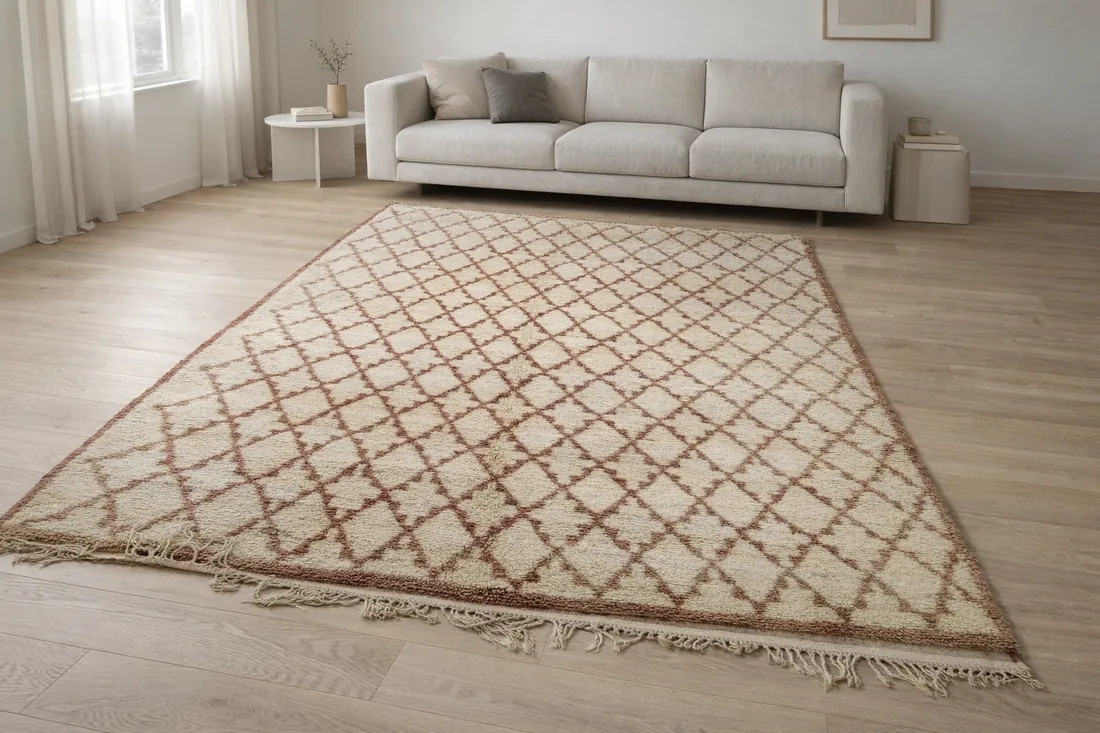
A seating group sitting within its rug. The margin of floor around the edge is doing as much work as the rug itself.
Lounges and lobby seating
Here the rug is defining a zone inside a larger space, so it should be sized from the furniture group outward, not from the room inward. Establish the arrangement – sofa, chairs, low table – then size the rug so the whole group stands on it with a margin around the outside.
Two traps. The first is sizing to the room and ending up with something that reads as fitted carpet with a border. The second is sizing to the coffee table, which produces a small island floating in the middle of a group and makes the seating look further apart than it is.
Where several seating groups sit in one lobby, consider whether each needs its own rug. Often two well-sized rugs define two conversations more clearly than four small ones, and they are easier to keep looking intentional as the furniture gets moved through the week.
Restaurants and dining areas
A rug under a dining table has one governing requirement: a chair pulled out for someone to sit down should still have all four legs on the rug. Everything else follows from that, which usually means a rug considerably larger than people first assume.
Because chairs drag across the surface, this is generally flatweave territory rather than deep pile – the reasoning is in Beni Ourain or kilim.
Corridors and circulation
Runners should be centred on the corridor with a consistent margin either side, and should stop clear of doorways rather than running under a door swing. Where a corridor is long, several runners with hard floor between them tend to hold their position better than one very long piece.
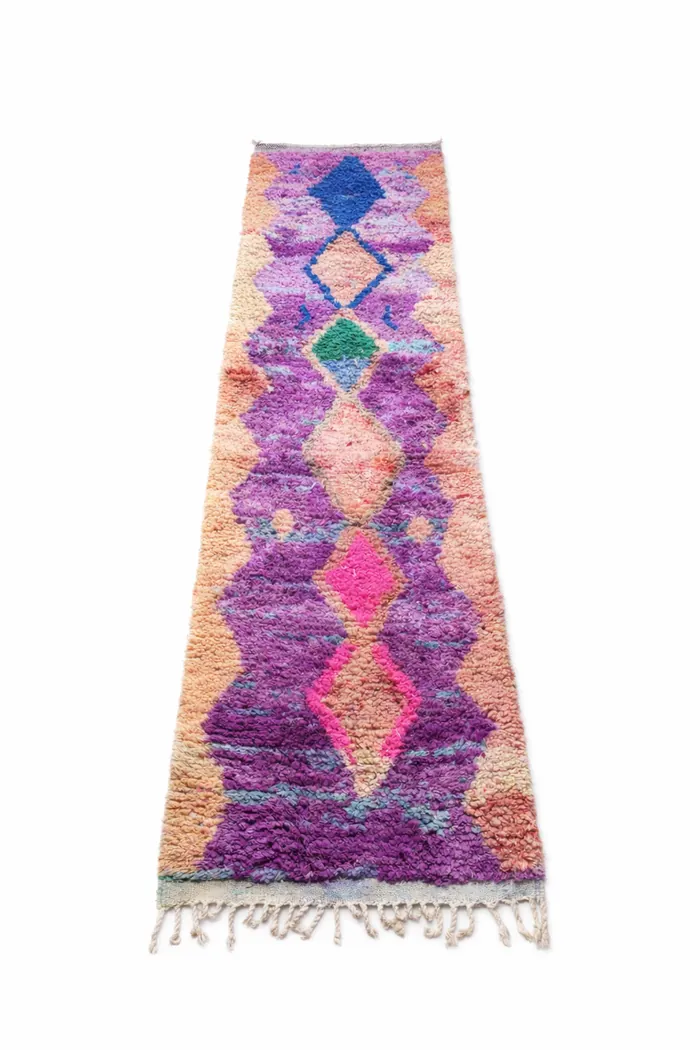
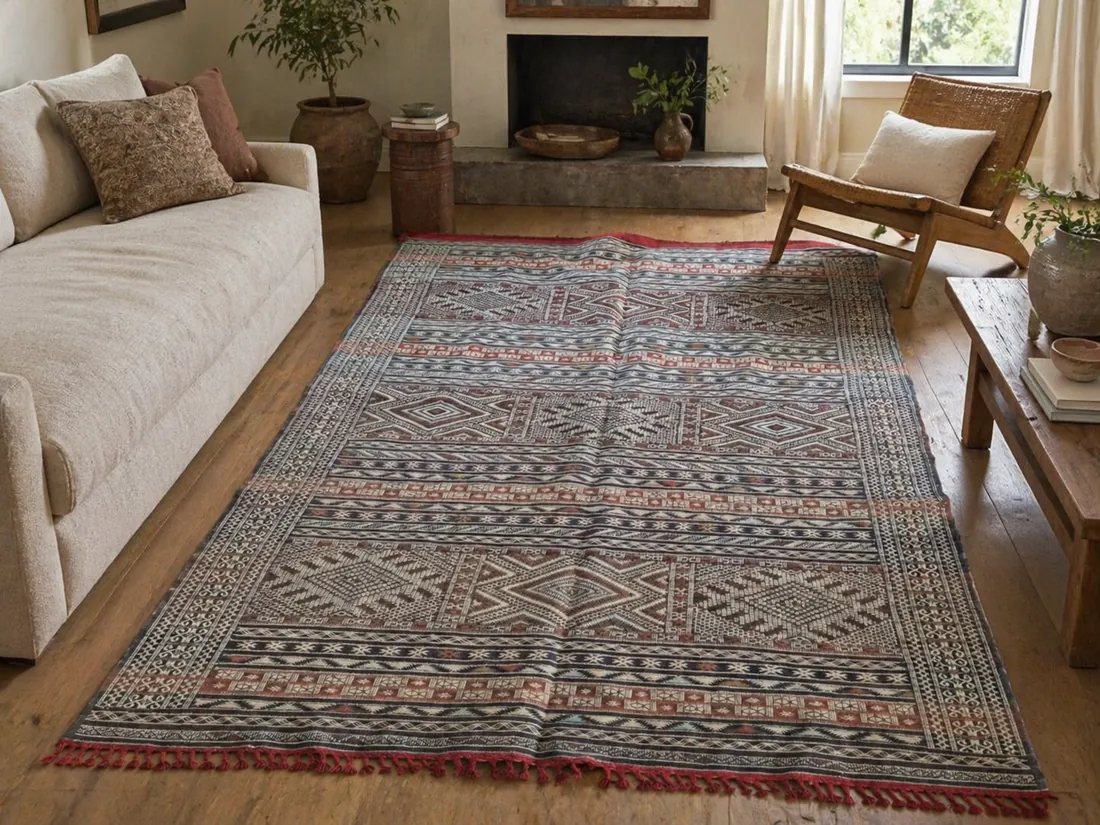
A runner format – for bedsides, dressing corridors and circulation.A flatweave holding a small group beside a fireplace. Sized from the furniture, not from the wall.
Commission the size rather than choosing from one
Standard rug sizes exist because retail needs them, not because rooms come in those dimensions. On a project with repeated room types, the argument for weaving to size is straightforward: the rug that fits the actual furniture layout will always outperform the nearest standard size, and on a repeated room type the difference is multiplied across every key.
It also removes the compromise that produces most undersized rugs – the moment when the correct size is not available, the next size down is, and the decision gets made on the day.
Before you issue the schedule
Mark each rug on the furniture layout rather than listing dimensions in a table. Sizing errors are almost invisible in a spreadsheet and immediately obvious on a plan – particularly the ones where a rug stops just short of a chair leg or just inside a door swing.
Three practical points
Specify underlay with every rug. It stops movement, protects both the rug and the floor, and in a public space it is a safety consideration as much as a comfort one.
Check door swings and level changes. A pile rug has thickness. Confirm undercuts before the pieces are woven, not after they arrive.
Allow for the pieces not being identical. Handwoven rugs vary slightly in dimension. Where rugs go into rooms guests compare directly, have them woven together, and allow a small tolerance in the layout.
Our rug collection is woven through our own network in Morocco, which means dimensions, proportions and colour can be developed against a room type rather than selected from stock.
Should hotel bedroom rugs run under the bed or in front of it?
Under the bed, extending past both sides and the foot, so the guest steps onto the rug. A rug placed only in front of the bed reads as an accessory and leaves the bedsides – the part that is actually used – on hard floor.
Can a rug be woven to a non-standard size?
Yes, where the supplier works directly with weavers. Handwoven rugs are made on a loom to a set width and length, so a size can be commissioned rather than selected. This is usually the better route for a repeated room type.
How much floor should show around a rug?
Enough to read as a deliberate border rather than a gap, and consistent on all sides. The exact margin depends on the room, but the test is simple: if it looks like the rug was intended to reach the wall and failed, it is too close.
Send the furniture layouts and room types. We will come back with rug proportions that suit them, in designs from the collection or developed for the project.