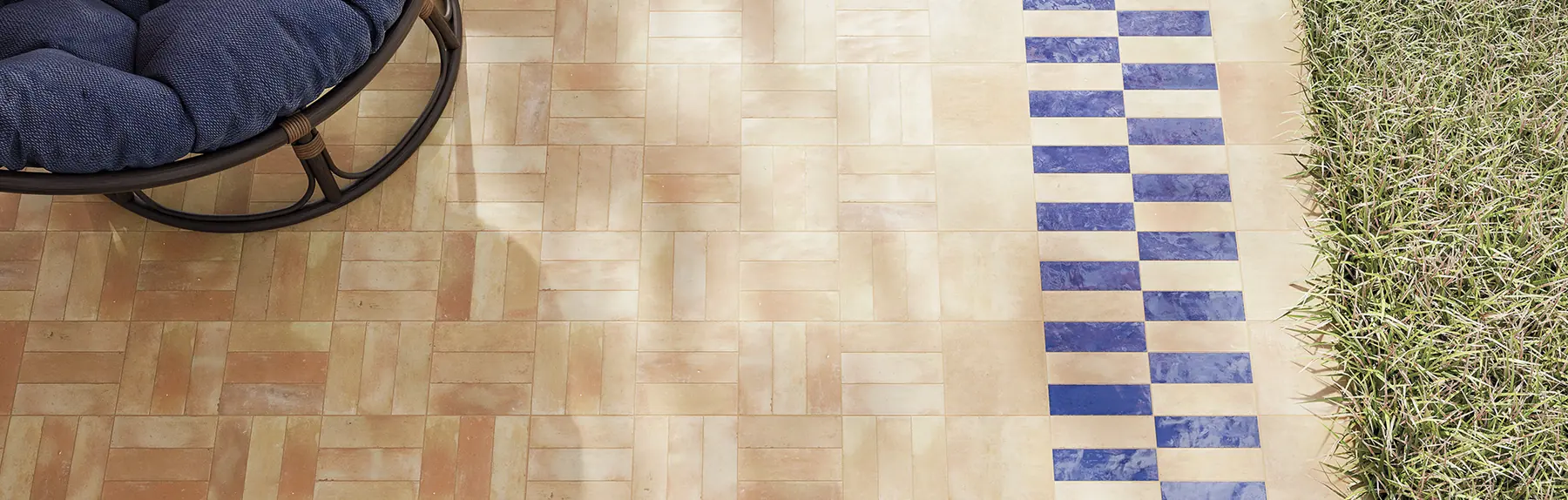
Moroccan architecture is built around outdoor rooms. The courtyard, the terrace, the fountain, the shaded arcade – these are the spaces the material was made for, and terracotta and glazed tile have been holding up in them under a strong North African sun for a very long time.
The Gulf is a related but harsher condition: more intense solar exposure, much higher humidity along the coast, salt in the air, dust in everything, and irrigation running daily against planted edges. None of that rules out the material. It does change which of it you use, and where.
Start with the right tile
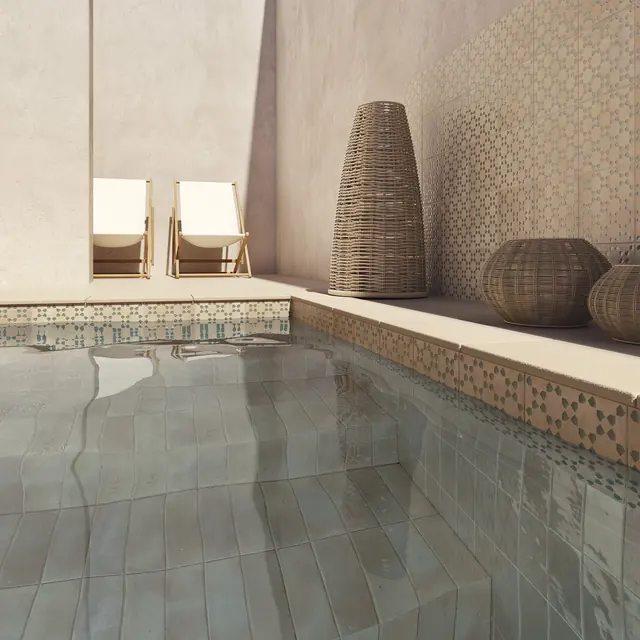
For horizontal outdoor surfaces, the Moroccan answer is bejmat – the thicker, kiln-fired terracotta developed as a floor. Zellige belongs outdoors too, but vertically: fountain surrounds, bench faces, wall panels, planter fronts, water features, threshold bands. The reasoning is the same as it is indoors and we set it out in zellige or bejmat.
What changes outdoors is the diligence around that choice. Exterior exposure introduces conditions – solar gain, thermal movement, salt, standing water, cleaning chemistry from pool plant – that need to be confirmed against the specific tile and the specific position rather than against the material in general. Ask your supplier for guidance on the actual product, and bring in the project’s waterproofing and landscape consultants early. Terraces over occupied space are a build-up question long before they are a finishes question.
Colour is a heat decision, not only an aesthetic one
This is the single most consequential choice on a Gulf terrace, and it is straightforward physics: a dark surface absorbs more solar energy than a light one and becomes hotter. Anywhere guests walk barefoot – pool decks, spa terraces, the transition out of a suite – that difference is felt directly.
Which points toward a clear approach:
- Keep the field pale. Sand, cream, natural ochre and white tones for the main walking surface, particularly around water.
- Concentrate colour where feet do not go. Borders, planter faces, steps in shade, vertical surfaces, the wall behind a bench.
- Use pattern rather than saturation. An inlaid patterned tile or a two-colour border gives a terrace character without darkening the whole surface.
- Consider gloss separately. A glazed surface in full sun can throw glare, which is uncomfortable around water and in bright reflected light. Matt natural finishes tend to be the easier answer for open decks; save the glaze for shaded and vertical positions.
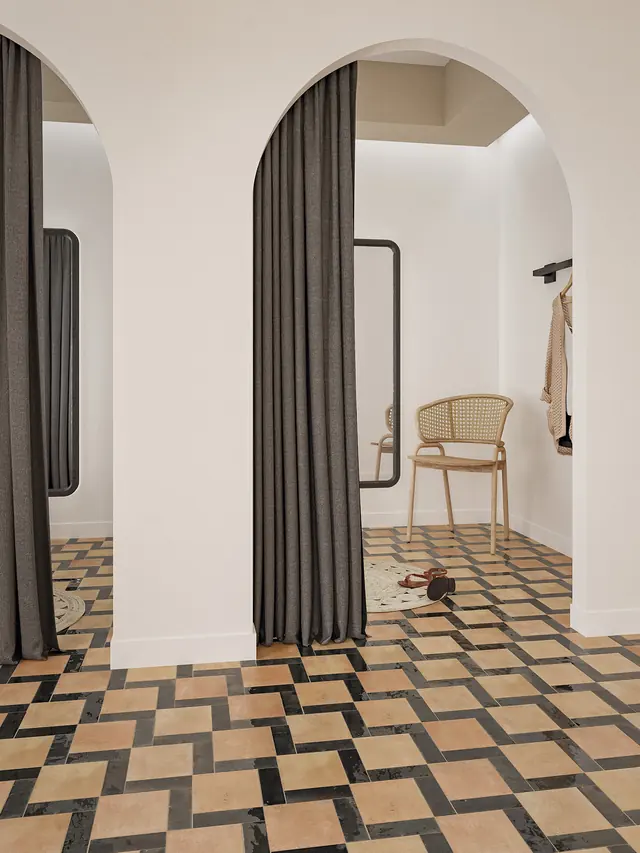
Shade changes all of this. A covered arcade, a pergola or a courtyard that is in shadow for most of the day can carry darker and glossier surfaces comfortably. Map where the shade actually falls through the day before fixing the colour distribution – it is more useful than any general rule.
Where zellige earns its place outdoors
Vertically, and around water, which is exactly where Moroccan architecture has always put it.
- Fountains and water features. Glaze looks its best wet, and a fountain keeps it wet. This is the most reliable outdoor use of the material.
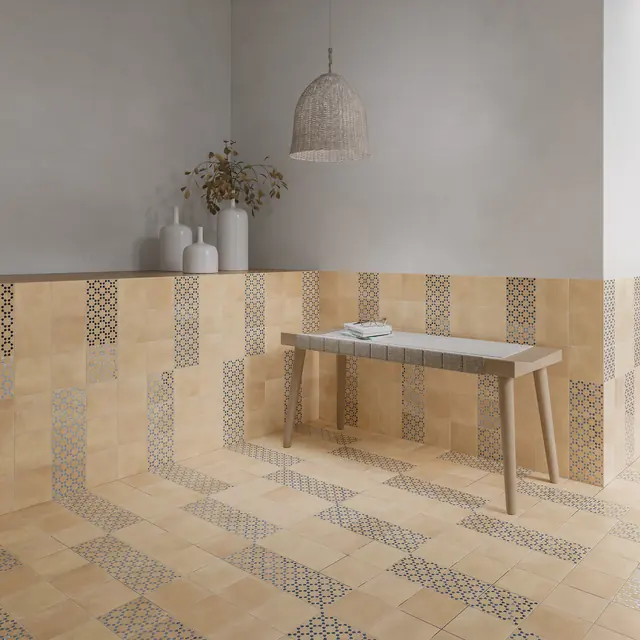
- Bench and seat faces. A tiled bench with a stone or timber top gives colour at seated eye level without a hot surface to sit on.
- Planter fronts and low walls. Colour at the edges of a terrace, framing the planting.
- Arcade and loggia walls. Shaded verticals where the glaze picks up reflected light from a bright courtyard beyond.
- Step risers. A vertical face in a horizontal package – colour without traffic.
Anything in an exterior position should be confirmed for that position with your supplier rather than assumed from an interior specification. That includes water features, where the pool or fountain water chemistry is part of the question.